

When homeowners think about protecting their roof, they usually picture shingles, flashing, and sheathing not the metal channels running along the roofline. But gutters and downspouts play just as important a role in your home’s long-term protection as anything on top of the roof itself. Our team at Hudson Roofing sees firsthand how often roof and foundation problems trace back to a drainage system that was overlooked or neglected for too long.
In this guide, we’ll explain how gutters and downspouts work together as a single system, why gutter drainage matters more than most homeowners realize, and how proper drainage protects both your roof and your home’s foundation.
Gutters and Downspouts: Two Halves of One System
It’s easy to think of gutters as the whole solution, but gutters only do half the job. Gutters collect the water running off your roof during rainfall, channeling it along the roofline instead of letting it cascade off the edge in sheets. Downspouts are what take that collected water and carry it safely down and away from your home’s foundation, walls, and landscaping.
Without downspouts, gutters would simply overflow at their lowest point, dumping concentrated water exactly where you don’t want it right along your foundation walls. Without gutters, downspouts would have nothing to collect water from in the first place, leaving roof runoff to erode landscaping, stain siding, and pool around your home’s perimeter. The two components only function properly as a matched, complete system.
How Gutter Drainage Protects Your Roof
Gutter drainage does more than keep water off your driveway. A properly functioning gutter system protects the roof itself in several important ways. First, it prevents water from pooling along the roof’s lower edge, which is one of the most common places for shingles and underlayment to deteriorate prematurely. Standing water along the eaves accelerates granule loss on asphalt shingles and can eventually work its way beneath the roofing material.
Second, functioning gutters help prevent ice dams in colder climates by moving meltwater away from the roof edge before it refreezes and backs up under the shingles. Even in milder climates, clogged or damaged gutters force water to find alternate paths, often behind fascia boards or into soffit vents, causing rot that’s expensive to repair and easy to miss until it’s advanced. If your fascia or roofline has already shown signs of water damage, it’s worth having a gutter repair specialist assess whether the drainage system contributed to the problem.
The Role of Downspouts in Directing Water Away
Downspouts often get overlooked because they’re less visible than gutters, but they carry an outsized share of the responsibility. A single clogged or undersized downspout can cause an entire section of gutter to overflow, even if the rest of the system is in good condition. Downspouts need to be sized appropriately for your roof’s square footage and your region’s typical rainfall intensity a downspout that works fine for a small addition may be badly undersized for a full roof section during a heavy storm.
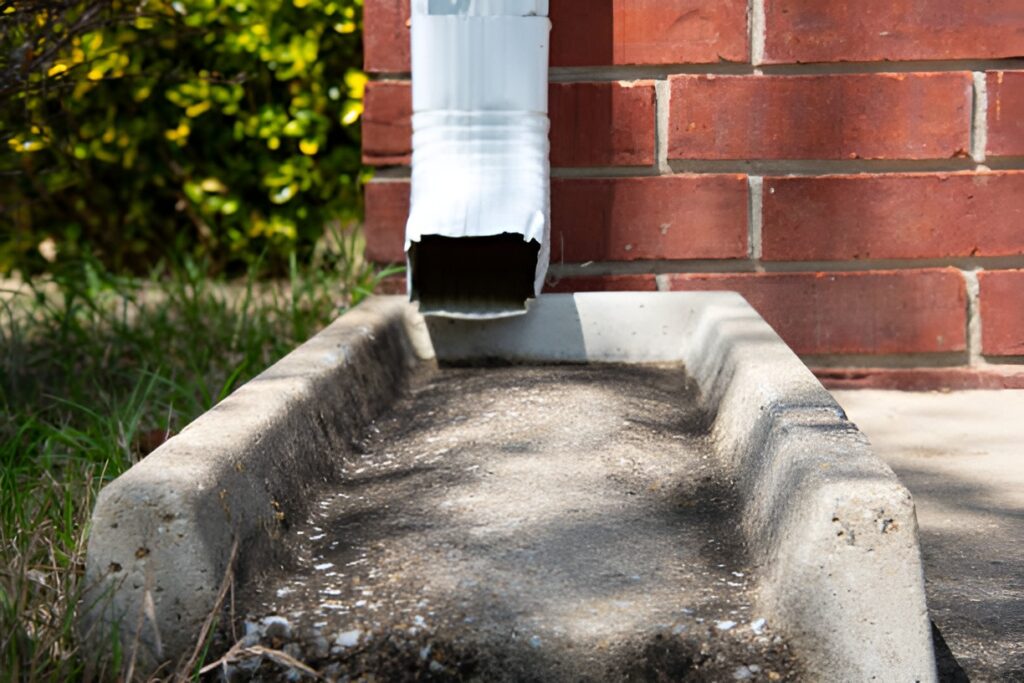
Placement matters just as much as size. Downspouts should discharge water at least four to six feet away from the foundation, ideally onto a splash block, extension, or connected drainage line that carries water even further from the home. Downspouts that empty directly at the foundation wall a surprisingly common installation mistake can undermine years of otherwise solid gutter performance.
Seamless Gutters: A Smarter Long-Term Option
Traditional sectional gutters are assembled from multiple pre-cut lengths joined together, and every seam is a potential failure point where leaks eventually develop. Seamless gutters, by contrast, are custom-formed on-site to match your roofline’s exact measurements, with joints only at corners and downspout connections. Fewer seams mean fewer leak opportunities, less debris buildup at connection points, and a cleaner overall appearance.
Seamless gutters also tend to hold up better over time, since there are fewer places for water to escape the channel before reaching the downspout. While the upfront cost can be slightly higher than sectional systems, the reduced leak risk and lower long-term maintenance make seamless gutters a popular upgrade for homeowners planning a full replacement alongside other exterior work, such as residential roofing projects.
How Poor Drainage Damages Your Roof Over Time
When gutters and downspouts fail to move water efficiently, the consequences rarely stay contained to the gutter system itself. Overflowing gutters send water cascading down the roof’s fascia board, which can lead to wood rot, paint failure, and eventually structural damage to the roof edge. Standing water in clogged sections adds unnecessary weight, which can pull gutters away from the fascia entirely during heavy storms.
Water that backs up under shingles due to poor drainage can also work its way into the roof deck itself, contributing to the kind of hidden moisture damage that’s difficult to catch without a professional inspection. If your roof has experienced water intrusion near the edges or valleys, it’s worth having a metal roof specialist or general roofing contractor evaluate whether drainage issues played a role, since addressing the gutter problem alone won’t fix damage that’s already occurred to the roofing material.
Foundation Protection: The Hidden Job of Your Gutter System
While roof protection tends to get the most attention, foundation protection is arguably the more expensive risk when gutters and downspouts fail. Water that isn’t properly directed away from your home tends to pool near the foundation, gradually saturating the soil beneath and around it. Over time, that saturation can lead to soil expansion and contraction cycles that stress foundation walls, contributing to cracks, settling, and uneven floors.
In more severe cases, pooling water near the foundation can seep into basements or crawl spaces, leading to mold growth, wood rot, and costly waterproofing repairs. Unlike a roof leak, which usually announces itself relatively quickly, foundation damage from poor drainage often develops slowly over years, making prevention through proper gutter and downspout function especially valuable compared to reactive repair.
Signs Your Gutter System Needs Attention
Several warning signs indicate your gutters and downspouts may not be doing their job effectively:
- Water visibly overflowing the gutter edge during moderate rainfall
- Gutters pulling away from the fascia board or sagging between hangers
- Visible rust, cracks, or seam separation on sectional gutter systems
- Erosion, pooling, or muddy patches near downspout discharge points
- Peeling paint or staining on siding directly below gutter sections
- Basement dampness or foundation cracks that seem to worsen after heavy rain
Catching these signs early typically means a straightforward repair rather than a full system replacement. If you’ve noticed any combination of these signs, it’s a good idea to schedule an inspection through our local roof repair team, which can evaluate the roof and drainage system together, since the two are so closely connected.
Gutter Maintenance Best Practices
Consistent gutter maintenance is what keeps a properly installed system performing the way it’s supposed to. At a minimum, gutters should be cleared of leaves, debris, and sediment twice a year typically in late spring and again after autumn leaf drop. Homes surrounded by mature trees may need more frequent cleaning to prevent buildup between scheduled visits.
Beyond cleaning, periodic maintenance should include checking for loose hangers, confirming downspouts remain clear and properly connected, and verifying that gutters maintain the correct slope toward downspout outlets. A gutter section that has lost its slope will hold standing water even when clear of debris, defeating the purpose of the system entirely. Installing gutter guards can meaningfully reduce the frequency of manual cleaning, though even guarded systems benefit from periodic inspection.
Choosing the Right Gutter System for Your Home
Not every home needs the same gutter setup. Roof size, pitch, regional rainfall intensity, and the number and placement of downspouts all factor into what system performs best. Homes with steep rooflines or large roof surface areas typically need wider gutters and additional downspouts to handle peak flow during heavy storms, while smaller homes with simpler rooflines may do fine with a standard configuration.
When to Call a Professional
While basic cleaning is a task many homeowners handle themselves, certain gutter and downspout issues are best left to a professional. Persistent leaks at seams, sections pulled away from the roofline, downspouts that stay clogged despite regular cleaning, or any signs of foundation-related water damage all warrant a professional evaluation rather than a DIY fix. A qualified contractor can also confirm whether your current system is properly sized for your roof, which is difficult to assess without experience comparing roof area to drainage capacity.
If you’re planning other exterior upgrades at the same time, it’s worth coordinating gutter work with related projects like window replacement, since water damage around windows and trim is often connected to the same drainage issues affecting your gutters.
Protecting Outdoor Structures Too
Gutters and downspouts don’t just protect your roof and foundation they also protect attached outdoor structures from water damage over time. Homes withcovered porches, entryways, or decks and ramps built close to the roofline are especially vulnerable if gutters overflow directly above them, since these structures often sit in the direct path of runoff when drainage fails.
Confirming that your gutter system properly protects these areas is one more reason a full drainage evaluation is worth scheduling periodically, especially if you’ve added any structures near your roofline since your gutters were originally installed.
Making Drainage Part of Your Home Maintenance Plan
Gutters and downspouts rarely get the attention they deserve until something goes wrong, but treating drainage as a core part of your home maintenance plan rather than an afterthought pays off in avoided repairs down the line. Most manufacturers back gutter systems with coverage worth reviewing carefully; ask your contractor about their manufacturer’s coverage on materials and workmanship before your next installation or major repair.
If it’s been a while since your gutters were inspected, or if you’ve noticed any of the warning signs covered above, don’t wait for a bigger problem to develop. Get in touch with our team to have your gutter and downspout system evaluated alongside your roof.
Conclusion
Gutters and downspouts aren’t separate accessories bolted onto your roofline they’re a single, essential drainage system that protects your roof, siding, foundation, and landscaping from the cumulative damage of uncontrolled water runoff. Proper gutter drainage keeps water away from your roof edge and fascia, while correctly placed downspouts carry that water safely away from your foundation before it has a chance to cause long-term structural harm. Whether you’re maintaining an existing system, upgrading to seamless gutters, or diagnosing a drainage problem for the first time, understanding how these two components work together is the first step toward protecting one of your home’s most important and most overlooked defense systems.
Frequently Asked Questions
Downspouts carry collected water away from the home; without them, gutters simply overflow at their lowest point.
Most homes need gutter cleaning at least twice a year, typically in late spring and after autumn leaves have fallen.
Yes, seamless gutters have fewer leak points and require less long-term maintenance than traditional sectional systems.
Yes, water pooling near the foundation from poor drainage can cause soil shifting, cracks, and long-term structural damage.
Downspouts should direct water at least four to six feet away from the foundation to prevent pooling and erosion.