

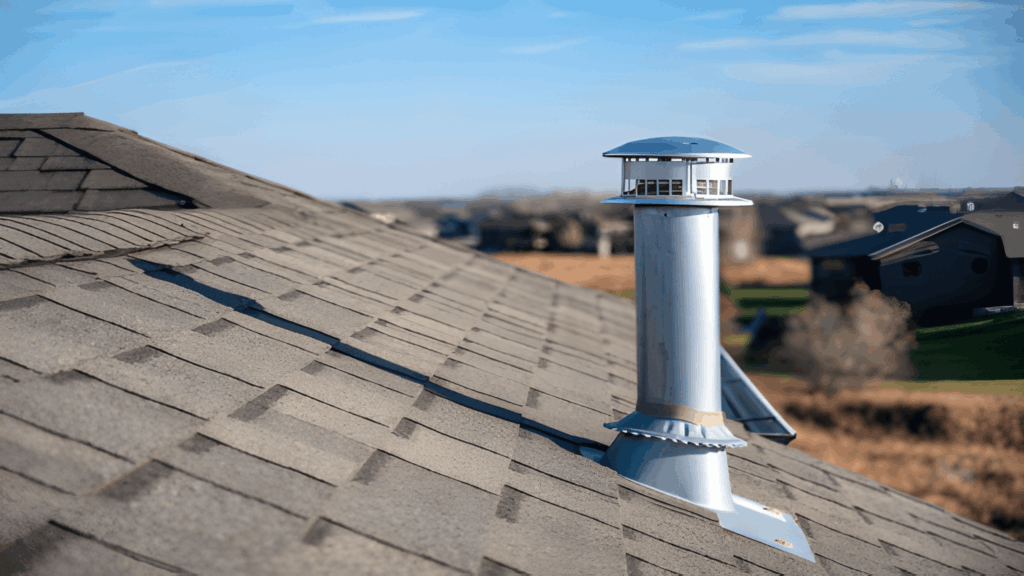
Most homeowners think about their roof in terms of shingles, flashing, and gutters, but one of the most important parts of a healthy roofing system is something you cannot see from the ground. Roof ventilation quietly manages heat and moisture inside your attic every day, and when it is not working properly, the effects show up as shortened shingle life, mold growth, and even structural damage over time.
This guide explains how roof ventilation works, why attic ventilation is so closely tied to the long term health of your roof, and what happens when airflow is not properly balanced. As a roofing company that regularly inspects attics with poor airflow, we see firsthand how much difference proper ventilation makes to a roof’s lifespan.
What Is Roof Ventilation?
Roof ventilation refers to the system of intake and exhaust vents that allow air to move continuously through an attic space. Intake vents, typically located along the soffits or lower edges of the roof, draw in cooler outside air. Exhaust vents, often positioned near the ridge or peak of the roof, allow warm, moist air to escape.
This constant exchange of air keeps the attic closer to outdoor temperature and humidity levels, rather than allowing heat and moisture to build up underneath the roof deck. A balanced system depends on having enough intake and exhaust working together, since too much of one without the other reduces the effectiveness of the whole system.
Why Roof Ventilation Matters
A roof without proper ventilation is exposed to a range of problems that are not always obvious right away. Understanding why ventilation matters helps explain why it is worth addressing early rather than waiting until damage appears.
Temperature Regulation
During hot months, an attic without adequate roof airflow can reach temperatures far higher than the outside air. This trapped heat radiates upward into the shingles, accelerating the breakdown of asphalt and shortening the roof’s expected lifespan. It also increases the workload on your home’s cooling system, since heat from the attic can transfer into living spaces below.
Moisture Control
In colder months, warm, moist air from inside the home naturally rises into the attic. Without proper exhaust ventilation, this moisture becomes trapped, condensing on the underside of the roof deck. Over time, this leads to roof moisture problems such as wood rot, mold growth, and insulation damage.
Ice Dam Prevention
In regions that experience snow and freezing temperatures, poor attic ventilation can contribute to ice dams. Heat escaping into an unventilated attic warms the roof surface unevenly, causing snow to melt and refreeze at the colder eaves. This cycle can force water backward under the shingles, leading to leaks inside the home.
Extending Shingle Life
Shingle manufacturers often specify ventilation requirements as part of their warranty terms. Roofs without adequate airflow tend to experience faster granule loss, curling, and even blistering due to excess heat buildup. Maintaining proper ventilation is one of the simplest ways to help a roof reach its full expected lifespan.
How Roof Ventilation Protects Against Moisture Damage
Roof moisture problems are among the most damaging issues a home can face, since moisture tends to spread quietly before becoming visible. Proper roof airflow addresses this in a few key ways.
First, consistent air movement prevents humid air from settling and condensing on cold surfaces inside the attic. Second, balanced ventilation helps regulate temperature swings that can cause condensation to form during seasonal changes. Third, a well ventilated attic dries out faster after any incidental moisture intrusion, reducing the chance of long term mold or rot developing.
Without this airflow, moisture can sit against the roof deck and insulation for extended periods, weakening wood structures and reducing insulation effectiveness. This is why ventilation is often addressed alongside other roof moisture problems, such as leaks or condensation around vent pipes and chimneys.
The Connection Between Ventilation and Roof Repair
When ventilation issues go unaddressed for a long period, the resulting damage often requires more than a simple fix. Rotting roof decking, damaged insulation, and shingles that have deteriorated faster than expected due to heat and moisture buildup may call for a broader roof repair rather than a small patch job.
If you are dealing with signs of moisture damage or premature shingle wear, working with an experienced team for roof repair in Gilmer homeowners trust can help identify whether ventilation is contributing to the problem. Addressing the root cause, rather than only repairing visible damage, helps prevent the same issues from returning.
How to Improve Roof Ventilation
If your attic is showing signs of poor airflow, there are several steps that can help improve the situation.
- Clear any insulation blocking soffit vents to restore proper intake airflow
- Add or upgrade ridge venting to improve exhaust capacity along the roofline
- Balance intake and exhaust vent sizing so neither side is doing more work than the other
- Consider a powered attic fan in extreme climates where passive ventilation is not enough
- Schedule a professional inspection if attic temperatures or moisture levels seem unusually high
Small adjustments to an existing system can sometimes resolve airflow issues, but in other cases, a more complete redesign of the attic ventilation system may be needed, particularly on older homes where ventilation was not a major consideration during original construction.
When to Call a Professional
Ventilation issues are not always obvious from a quick look inside the attic, and improper adjustments can sometimes make airflow problems worse rather than better. If you are noticing signs of roof moisture problems, unusually high attic temperatures, or shingles that seem to be aging faster than expected, it is worth having a professional assess the situation.
A qualified roof fixer can evaluate whether your current intake and exhaust vents are properly balanced, check for blockages, and recommend the right combination of ventilation upgrades for your specific roof design. In some cases, what looks like a ventilation issue may actually be tied to a separate roof repairing need, such as damaged flashing or a compromised roof deck, which is why a full inspection is often the best starting point.
Ventilation Considerations for Different Roof Types
Ventilation needs can vary depending on the type of roofing system and the design of the home. Steeply pitched roofs often have more attic space to ventilate, while low slope roofs may require different venting strategies altogether. Homes with cathedral ceilings or finished attic spaces also need special consideration, since traditional soffit to ridge airflow may not be possible in the same way.
Regardless of roof type, the underlying principle stays the same. Air needs a way in and a way out, and that airflow needs to be continuous and balanced to be effective. A residential roof repair Gilmer specialist can evaluate your specific roof design and recommend a ventilation approach suited to your home’s structure.
The Long Term Value of Proper Ventilation
Investing in proper roof ventilation is often overlooked because its benefits are not always immediately visible. Unlike a leak or missing shingle, ventilation problems tend to cause damage gradually, which means the value of good airflow is best measured over years rather than days.
Homes with properly balanced ventilation typically see longer shingle lifespans, fewer moisture related repairs, and more consistent indoor temperatures. This makes ventilation one of the more cost effective investments a homeowner can make in the long term health of their roofing system, especially when compared to the cost of repairing extensive moisture damage after the fact.
Conclusion
Roof ventilation plays a much bigger role in the health of a roofing system than many homeowners realize. Balanced attic ventilation helps regulate temperature, prevents roof moisture problems, protects against ice dams, and extends the overall lifespan of the shingles. Ignoring ventilation issues can lead to more serious problems over time, including wood rot, mold growth, and premature shingle failure that may require a larger roof repair down the line.
If you suspect your attic is not properly ventilated, or if you are noticing signs of moisture damage, uneven shingle wear, or high attic temperatures, it is worth having a professional take a closer look. Contact us at Hudson Roofing to schedule an inspection and find out whether your roof’s ventilation system is doing its job properly.
Frequently Asked Questions
Signs of insufficient ventilation include excessive attic heat in summer, condensation or frost on the roof deck in winter, musty odors, and shingles that appear to be aging faster than expected. A professional inspection can confirm whether intake and exhaust are properly balanced.
Intake ventilation, typically through soffit vents, draws cooler outside air into the attic. Exhaust ventilation, often through ridge or gable vents, allows warm, moist air to escape. Both need to work together for a balanced system.
Yes. Trapped heat accelerates the breakdown of asphalt shingles, leading to faster granule loss, curling, and blistering. Proper roof airflow helps regulate attic temperature and reduces this kind of premature wear.
Proper ventilation helps keep the roof surface at a more even temperature, which reduces the uneven snowmelt that leads to ice dam formation along the eaves. Poor ventilation is one of the more common contributing factors to ice dams.
An annual check is generally a good practice, though homes showing signs of moisture problems, high energy bills, or uneven shingle wear should be inspected sooner. Ventilation is often reviewed as part of a broader roof inspection.