

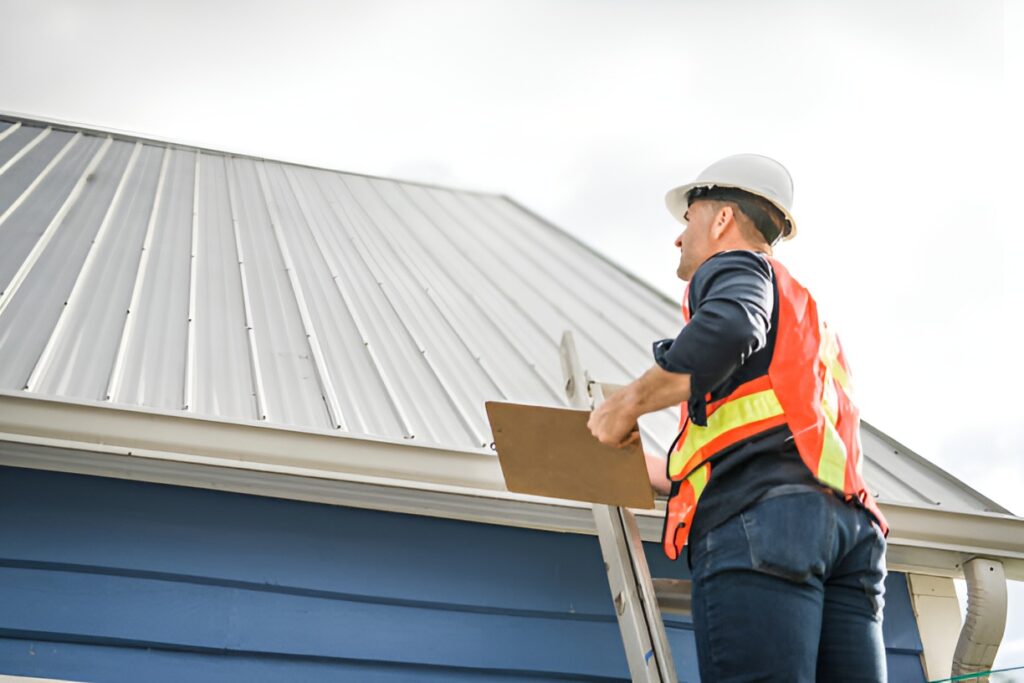
Every commercial roof reaches a point where repairs stop making financial sense and replacement becomes the smarter investment. The challenge is knowing when that point arrives, since most roofs don’t fail all at once they send warning signs for months or years before a full commercial roof replacement becomes unavoidable. Our team of roofing contractors in Gilmer, TX helps property owners across East Texas read those signs early, so decisions get made on a planned timeline instead of during an emergency.
In this guide, we’ll walk through seven of the clearest indicators that your roof has moved past the point of cost-effective repair, along with guidance on how roof lifespan, material type, and repair history should factor into your decision.
1. Frequent, Recurring Repairs
If your maintenance team or roofing contractor has been called out for the same leak, seam failure, or flashing issue more than once or twice in a short window, that’s a strong signal the underlying material has deteriorated past the point where spot repairs hold. Recurring repairs in the same location usually mean the surrounding material has lost its flexibility or bonding strength, and patching it again is often just delaying the same failure.
Property owners should track repair frequency and cost over time. Once annual repair costs approach 20–25% of a full replacement, most roofing professionals consider that the tipping point where continued patchwork stops being economical. If your roof has needed several visits from a roof repair specialist in Gilmer within the past year, it’s worth requesting a replacement estimate for comparison rather than approving another isolated repair.
2. Widespread Membrane or Material Deterioration
A single crack or blister is a repair. Widespread cracking, blistering, or brittleness across large sections of the roof is a replacement sign. This kind of deterioration typically shows up as alligator-pattern cracking on older built-up systems, chalking and granule loss on modified bitumen, or seam separation across multiple areas on single-ply membranes.
Different commercial roofing systems age differently, which is why an experienced inspector matters a technician unfamiliar with your specific membrane type may misjudge how much useful life remains. If an inspection reveals deterioration spread across more than 25–30% of the roof surface, targeted repairs generally aren’t a durable fix, and a broader conversation about replacement options is warranted.
3. Persistent Ponding Water
Water that stands on a flat or low-slope roof for more than 48 hours after rainfall is considered ponding, and it’s one of the most damaging conditions a commercial roof can face. Ponding accelerates membrane breakdown, adds significant structural weight, and often signals that the roof deck itself has begun to sag in that area a problem that surface-level repairs can’t correct.
Persistent ponding, especially if it appears in the same spots after every storm, usually points to a drainage or structural issue rather than a material issue, which makes it one of the clearest flat roof replacement signs. Poor drainage components often make ponding worse over time, so it’s worth having your gutter and drainage systems evaluated alongside the roof itself to rule out compounding causes.
4. Visible Sagging or Structural Deflection
Any visible dip, sag, or uneven area across the roofline is a serious warning sign that shouldn’t wait for the next scheduled inspection. Sagging usually indicates that the roof deck has absorbed moisture over an extended period, weakening the structural material beneath the membrane. In some cases, it can also point to deteriorating insulation that has lost its ability to support the roofing system above it.
Because structural sagging affects the roof deck rather than just the surface material, it almost always falls outside the scope of a standard repair. Left unaddressed, it can progress to localized roof deck failure, which becomes a safety issue as well as a financial one. Any visible sagging warrants an immediate inspection rather than a wait-and-see approach.
5. Interior Water Damage and Rising Moisture Levels
Ceiling stains, bubbling paint, and musty odors inside the building are often the first signs occupants notice, even before anything looks wrong from the roof itself. By the time water damage becomes visible indoors, moisture has usually been infiltrating insulation and structural components for a while, which means the damage frequently extends beyond what a single visible leak point would suggest.
Infrared moisture scanning during a professional inspection can reveal the true scope of trapped moisture, often far larger than the wet spot visible on the ceiling below. If scanning shows moisture spread across a significant portion of the insulation layer, replacing the affected sections or the full roofing system is typically more cost-effective than trying to dry out and patch a compromised assembly.
6. Steadily Increasing Energy Costs
A less obvious but financially significant warning sign is a gradual rise in heating and cooling costs that isn’t explained by rate changes or equipment issues. Aging or damaged roofing systems lose insulating value over time, especially once moisture infiltrates the insulation layer, and the building’s HVAC system has to work harder to compensate.
Tracking energy costs year over year gives property owners an early, quantifiable indicator that the roof may be underperforming, often well before visible damage appears. If energy costs have climbed steadily over the past few years without a clear explanation elsewhere, it’s worth adding roof performance to the list of factors under review.
7. Roof Age Combined with Multiple Warning Signs
Any single sign on this list might point to a repair rather than a replacement. But when a roof is approaching or has passed its expected lifespan and shows two or more of these warning signs simultaneously, that combination is usually the clearest replacement signal available. An aging roof with recurring repairs, visible ponding, and rising energy costs, for example, is very unlikely to be a good candidate for continued patchwork.
At this stage, most property owners find it more practical to request a full replacement estimate alongside a repair estimate, so they can compare the true long-term cost of each path side by side rather than approving repairs one at a time without a clear endpoint.
When Replacement Makes More Financial Sense Than Repair
A useful way to frame the decision: if a qualified inspector estimates that repairs will only extend the roof’s usable life by a year or two before further work is needed, that cost is usually better redirected toward a full replacement with a fresh warranty and predictable lifespan. Manufacturers typically require specific installation standards to honor a new warranty, so it’s worth confirming exactly what’s covered through your contractor’s warranty documentation before committing to either path.
Flat Roof Replacement Considerations
Flat roof replacement projects come with a few extra planning considerations compared to sloped systems. Because flat roofs rely heavily on proper drainage design, a replacement is often the right opportunity to correct slope or drainage issues that contributed to the original roof’s failure, rather than simply reinstalling the same design that led to ponding in the first place.
Material selection also matters more on a replacement than a repair. TPO, EPDM, PVC, and modified bitumen all offer different balances of cost, durability, and energy efficiency, and a replacement project gives property owners a chance to upgrade to a system better suited to their building’s specific climate exposure and rooftop equipment load.
Choosing Commercial Roofing Systems Built to Last
Selecting the right system for a replacement is just as important as the installation itself. Metal roofing has become an increasingly popular option for commercial properties looking for a longer lifespan and lower long-term maintenance needs, and our metal roofing contractors can walk through whether it’s a fit for your building’s structure and budget compared to traditional membrane systems.
Whatever system you choose, the quality of installation matters as much as the material itself. A properly installed roof, backed by manufacturer-certified installers, will consistently outperform a lower-cost installation using the same materials a difference that often isn’t apparent until years later when seams and flashing begin to fail prematurely.
Working With an Experienced Commercial Roofing Team
Replacement decisions carry real financial weight, which makes contractor selection one of the most important parts of the process. Look for a team with a documented history of commercial work, not just residential experience, since the materials, equipment, and installation standards differ significantly between the two. You can review examples of similar work in our completed commercial projects gallery to see the scope of systems our team regularly installs.
It’s also worth confirming that your contractor serves your specific area with consistent, local crews rather than subcontracting out of region. Property owners near Longview and those managing buildings closer to Tyler both benefit from working with a team that understands regional weather patterns and code requirements specific to East Texas.
Getting a Professional Opinion Before You Decide
If you’re seeing two or more of the warning signs covered above, the next step is a professional inspection rather than a guess. A qualified contractor can evaluate the full scope of damage, provide side-by-side repair and replacement estimates, and help you make the decision with real numbers instead of uncertainty. Ready to find out where your roof stands? Schedule a free consultation with our team to get a clear, documented assessment.
Conclusion
Recognizing the warning signs of commercial roof failure early gives property owners the ability to plan a replacement on their own timeline, rather than scrambling after a leak forces the issue. Recurring repairs, widespread material deterioration, persistent ponding, visible sagging, interior moisture, rising energy costs, and an aging roof showing multiple compounding issues are all strong indicators that repair has reached its limit. Understanding your roof’s lifespan and reviewing these signs honestly ideally with the help of a qualified inspector puts you in the best position to choose replacement at the right time, with the right system, instead of the wrong one under pressure.
Frequently Asked Questions
Most commercial roofs last 15 to 30 years depending on material, with metal systems often lasting significantly longer.
Isolated damage usually means repair, while widespread deterioration, recurring leaks, or an aging roof point to replacement.
Not always, but persistent ponding after 48 hours often signals drainage or structural issues worth a full evaluation.
Yes. Damaged insulation beneath an aging roof reduces efficiency, gradually raising heating and cooling costs over time.
Costs vary widely by size and material, but replacement often becomes cheaper once annual repairs exceed 20–25% of that cost.